Why a Simulator Is the Best Starting Point for Future Drone Pilots
25 March 2026
The world of unmanned aerial vehicles is advancing rapidly, and demand for skilled drone operators keeps climbing year after year. Before taking a real aircraft into the sky, there's one fundamental question every aspiring pilot needs to answer: how can you build reliable flight skills without risking costly hardware? The most effective solution is to start with a simulator.
Real-World Learning Risks
New pilots who jump straight to flying a quadcopter with their first physical drone quickly encounter a set of predictable challenges. The most obvious is financial exposure. Even a modest FPV drone can cost several hundred dollars, and one hard landing can put it out of service fast. Spare motors, frames, flight controllers, and replacement parts quickly add up.
The second challenge is pressure. When a beginner holds the transmitter for the first time and watches the drone respond unpredictably to every stick input, fear often takes over. Instead of calmly learning how to control a quad via a remote controller, the operator gets tense, compounds mistakes, and makes progress slower than it needs to be.
Third, training time is limited. Batteries typically provide only a few minutes of flight, and each session ends with downtime to recharge. Across a day, only a small number of flights are possible, stretching skill development into weeks instead of compressing it into focused practice.
What a Simulator Brings to the Table
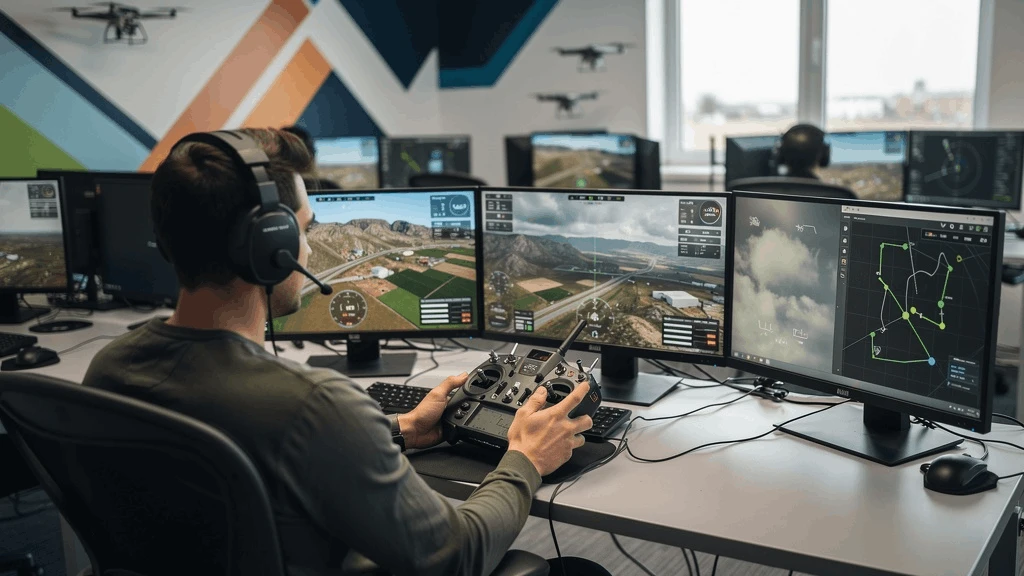
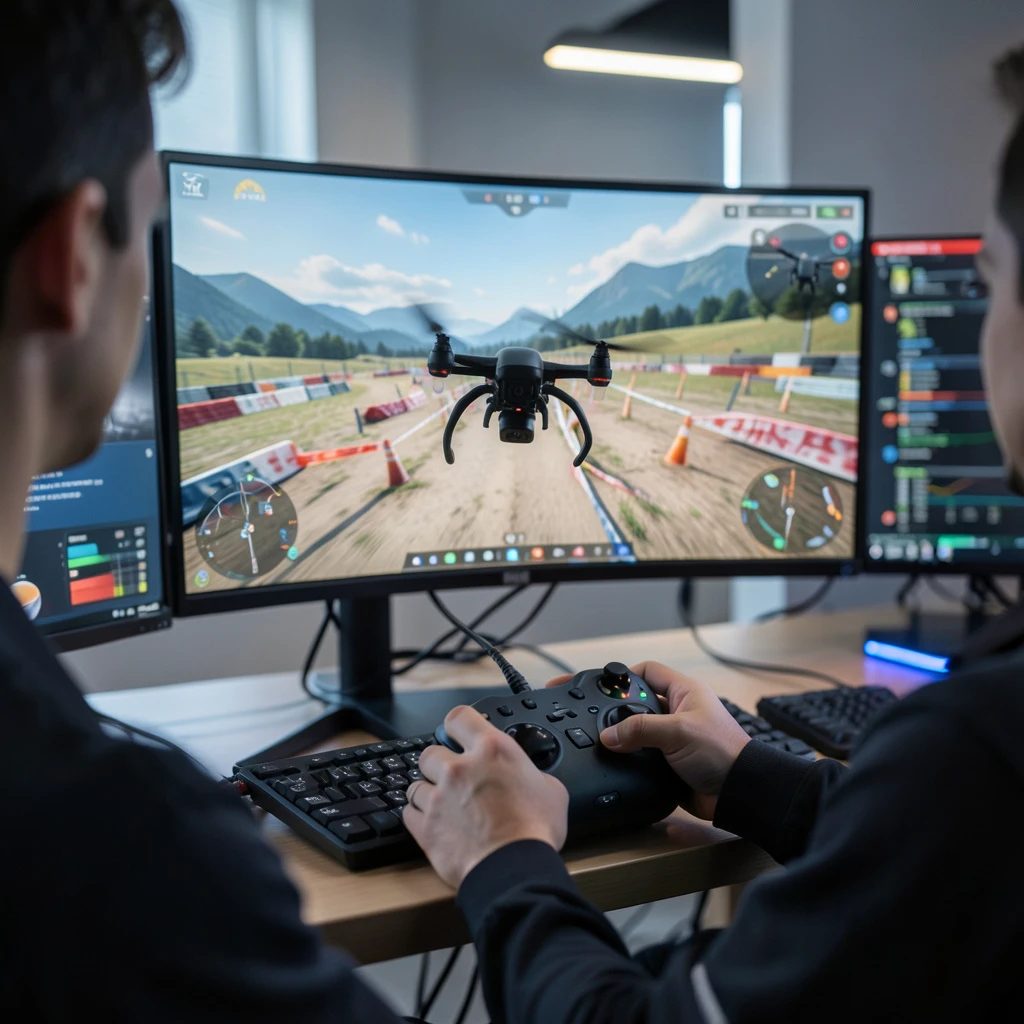
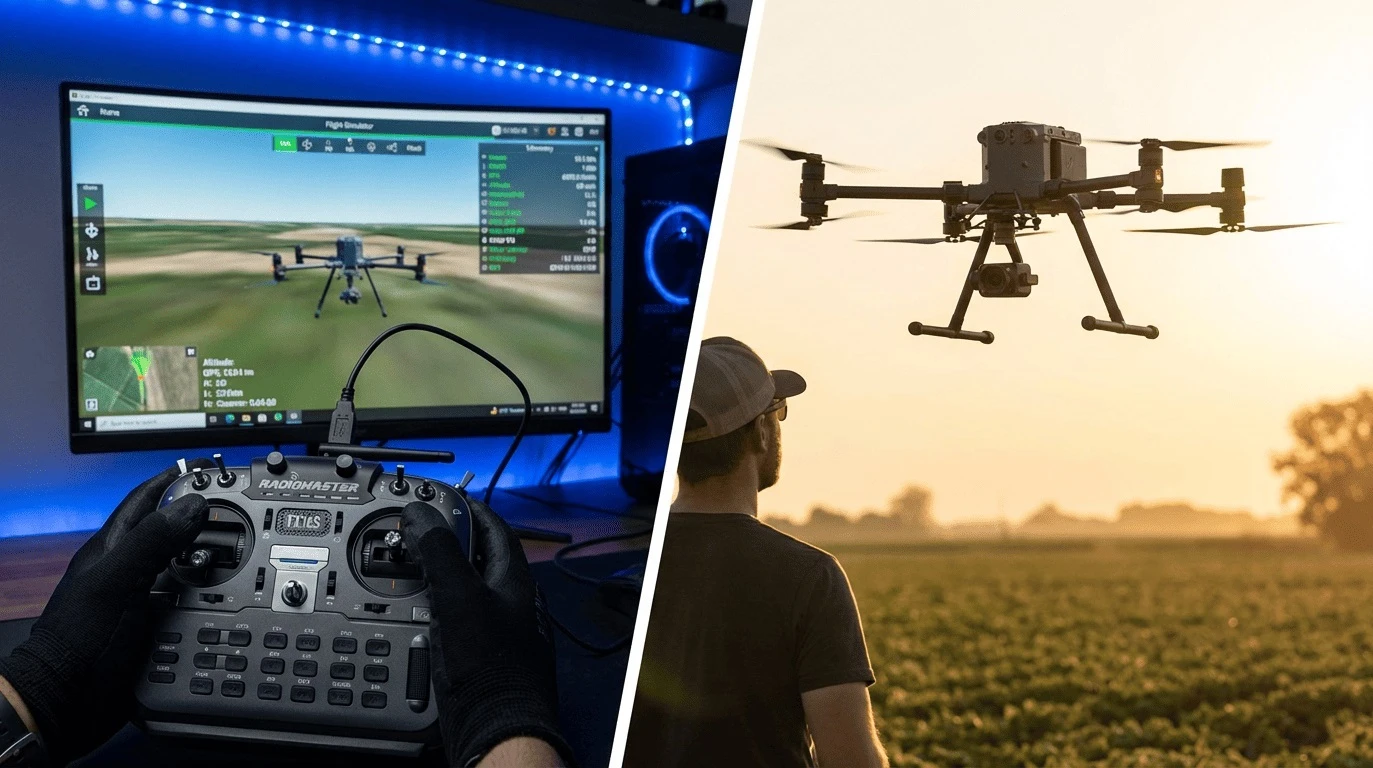
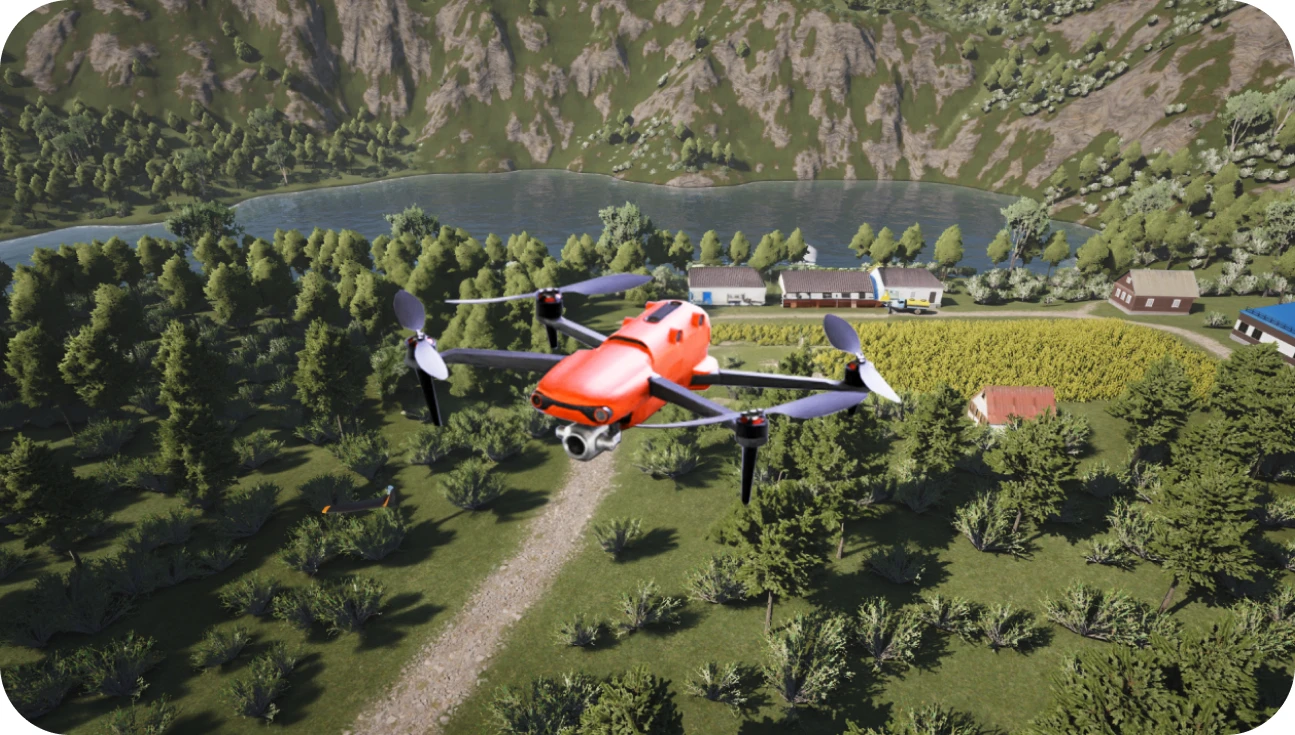
At uavprofsim.com, simulation addresses all of these obstacles at once. A virtual environment lets you fly for as long as you want, with no battery cap and no fear of damaging the equipment. Crash your virtual drone? A reset puts you right back in the air.
Modern simulators model flight physics closely — covering momentum, wind effects, and how aircraft behave across different flight modes. The habits you form carry directly into real-world piloting, because you're training the same sense of control, timing, and response.
This is especially valuable for learning ACRO mode — the fully manual style of flight with minimal stabilization. Many regard ACRO as the hardest threshold to cross, yet it's also what unlocks a drone's maximum agility and pilot agency in FPV flying. In this mode, the flight controller doesn't automatically level the aircraft; the pilot maintains orientation by managing every degree of tilt themselves. Small stick adjustments remain active until corrected, so mistakes persist if input isn't managed deliberately. Practicing that on a real machine is expensive and hazardous; in a simulator, it's controlled, repeatable, and genuinely efficient.
A Step-by-Step Way to Master Quadcopter Control in the Simulator
On uavprofsim.com, a structured training progression typically follows a series of stages, each building on the last.
Basic hover control. Develop stable hovering in an assisted mode, learning how the drone responds to command inputs and how to make steady corrections.
Simple directional movement. Forward/back, left/right, and gentle yaw turns — this builds coordinated two-stick control and smoother transitions.
Intro to ACRO. Transition toward manual flight by practicing controlled rotations and height discipline. Early ACRO skills require dozens of hours of repetition, and the simulator lets you accumulate that experience safely.
Track runs and obstacle courses. Flying through gates and around obstacles sharpens spatial awareness, reaction speed, and precision under pressure.
Escalating conditions. Add simulated wind, tighter environments, or camera-handling constraints to prepare for the real variables operators eventually face.
How Much Sim Time Pays Off
Experienced pilots and instructors generally recommend a minimum of about 10–20 hours in simulation before a first real flight. That baseline tends to deliver enough confidence to handle common situations and remain composed when anything unexpected occurs.
For stronger mastery of ACRO control, many pilots build toward roughly 30–50 hours, especially with consistent weekly sessions. That volume of deliberate repetition can materialize in a couple of focused weeks in simulation — far less disruptive than attempting the same learning curve with aircraft downtime, wear, and repair cycles.
Who Benefits Most
This approach isn't limited to racing enthusiasts. Anyone aiming for professional UAV work — applications in cinematography, agriculture, inspection and monitoring, search operations, or essential defense-related missions — can establish a reliable baseline that makes advanced growth safer and faster.
Understanding how to operate an FPV system, how flight modes behave, and how ACRO differs from stabilized profiles is something that's most efficiently embedded during initial simulator training.
If your goal is to learn drone control quickly and sustainably, starting with a simulator is the safest, most cost-effective, and most dependable path. It doesn't replace real flying, but it establishes the fundamentals that make your first live flight confident — and helps protect the equipment you'll depend on later. For anyone serious about building a lasting skill set as a drone pilot, the simulation experience at uavprofsim.com is a foundational investment that will translate into better outcomes from day one.